


Why Your First Oyster Probably Tasted Wrong
If your first oyster tasted bad, it likely wasn’t your fault. Common issues like poor handling, improper storage, or bad sourcing can ruin the experience. Oysters should be plump, moist, and smell clean - like the ocean. A fishy or ammonia-like odor signals spoilage. Here’s what might have gone wrong:
- Dead or mishandled oysters: Once an oyster dies, it deteriorates quickly, affecting flavor and texture. Always check freshness with the tap test - live oysters close their shells when tapped.
- Storage problems: Oysters need to stay between 33°F and 40°F and must not dry out. Airtight containers or cracked shells are red flags.
- Merroir mismatches: Oysters’ flavor depends on where they’re harvested. East Coast oysters are salty and bold, while West Coast oysters are sweeter with subtle notes.
- Preparation mistakes: Poor shucking or overcooking can ruin texture and flavor. Serve raw oysters cold (35–40°F) on ice and handle them carefully.
For a better experience, buy from trusted sources like Little Wicomico Oyster Co., which ensures optimal storage, traceable harvest dates, and premium quality. Their Farm Fresh Oyster Sampler ($99.00) offers 100 oysters with a shucking knife, making it easier to enjoy oysters the right way.
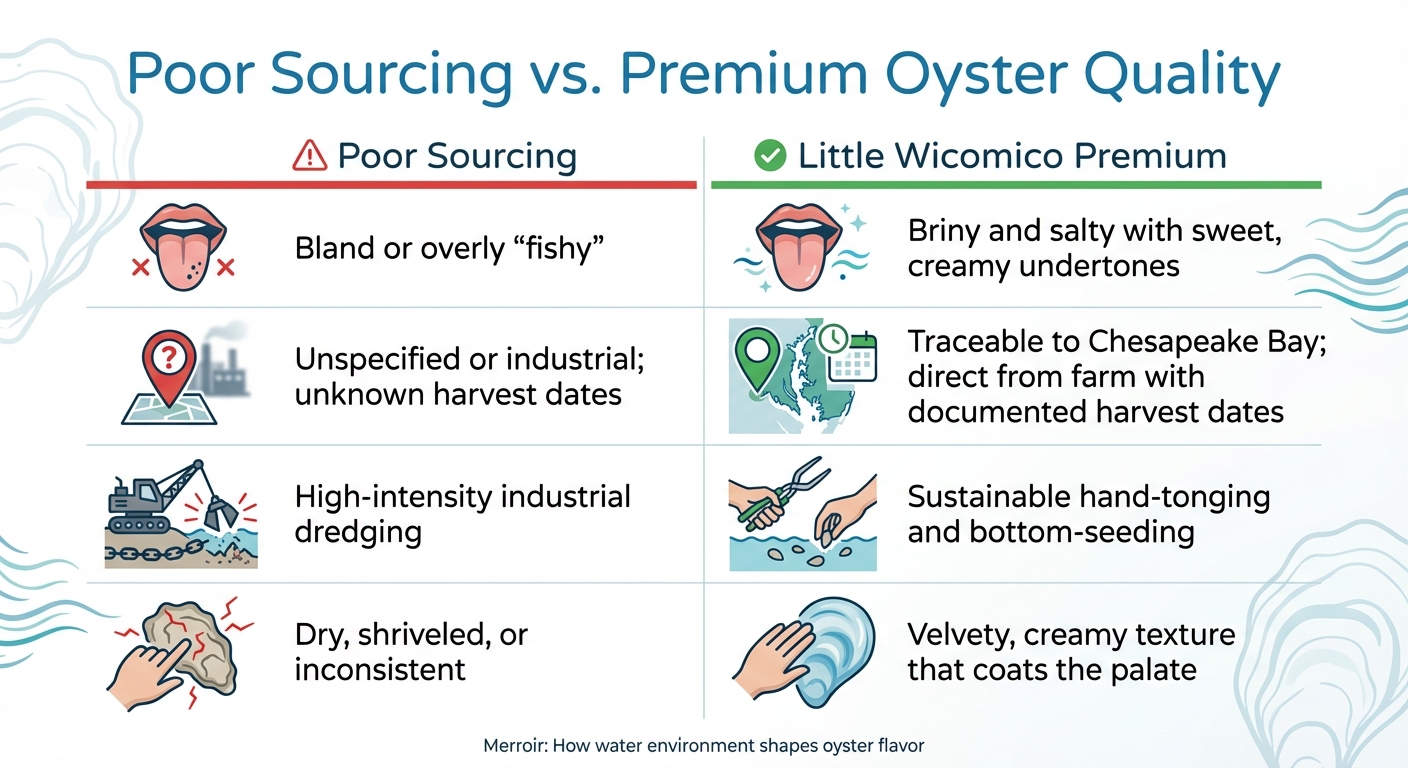
Poor vs Premium Oyster Sourcing Comparison Chart
1. Dead or Poorly Handled Oysters
Dead oysters can ruin the experience. Once an oyster dies, it starts to deteriorate, releasing unpleasant odors and altering its texture. This is why handling and storage are so critical.
Oysters need to be kept between 33°F and 40°F to stay dormant and maintain their quality. Unfortunately, many first-time buyers don't realize that mishandling often occurs during transport or storage - long before they even open the package. Want to check if an oyster is fresh? The tap test is your go-to method.
How to Tell if an Oyster is Fresh and Alive
The tap test is simple and effective. Gently tap the oyster against a hard surface or another shell. If it’s alive, the shell will close tightly within seconds. If it stays open, it’s no longer alive and should be discarded.
You can also gauge freshness by examining the shell. Heavy, tightly closed shells usually mean the oyster is full of its natural liquor, which is key to its flavor. On the other hand, a lightweight shell could indicate that the oyster has lost its liquor. Be sure to avoid oysters with cracked or damaged shells, as these can compromise freshness.
"When you slurp back oysters raw, they are still alive or just freshly killed or shucked prior to serving... This ensures they are fresh when eating, so they maintain the right flavor profile, texture and nutrient density." - Alex Lewis, Registered Dietitian
Why Sourcing from Trusted Producers Matters
Little Wicomico Oyster Co. takes freshness seriously. They hand-harvest their oysters and maintain strict temperature controls during shipping to ensure the oysters arrive alive and in peak condition. For the best flavor and texture, oysters should be eaten raw within 7–10 days of their harvest date.
But it doesn’t stop at harvest. Proper storage is vital. Oysters need airflow, so they should never be kept in airtight containers or plastic bags. Little Wicomico performs daily inspections, checking for cracked shells, bad odors, or oysters that fail the tap test. These extra steps ensure their oysters retain the right texture and flavor every time.
sbb-itb-5051793
2. Bad Smells and Flavors
Fresh oysters should smell like the ocean - light, clean, and refreshing. If you detect a strong sulfuric or ammonia-like odor, it’s a red flag that the oyster might be spoiled. This often happens when oysters aren’t stored at the proper temperature. To stay fresh, oysters need to be kept between 32°F and 39°F. When temperatures deviate, bacteria can break down the proteins, leading to spoilage and unpleasant flavors.
What Fresh Oysters Should Smell and Taste Like
Good oysters have a mild brininess, a light aroma, and a pleasant hint of salt. The natural liquor inside the shell plays a big role in delivering this delicate flavor. Oysters that are well-hydrated and full of liquor offer the best taste experience.
How Little Wicomico Maintains Consistent Flavor
Maintaining the perfect flavor in oysters requires careful attention to farming and handling. Little Wicomico Oyster Co. grows its oysters in the pristine waters of Virginia's Little Wicomico River. Their meticulous farming methods and the river’s ideal conditions create oysters with a distinctive taste. For example, their Blackberry® Oysters are known for their balanced mineral notes. This flavor consistency is achieved through strict temperature management from the moment the oysters are harvested until they’re delivered. By maintaining a reliable cold chain, Little Wicomico ensures each oyster retains its natural liquor and fresh-from-the-ocean quality.
3. Dry or Shriveled Oysters: Why Texture Matters
When oyster meat becomes dry and shriveled, it's usually the result of losing moisture. This can happen due to improper storage, waiting too long to eat them, or exposure to air. The result? A rubbery texture that not only feels unpleasant but also dulls the oyster's natural flavor. You can often spot these changes just by looking at the meat.
What Quality Oyster Meat Looks Like
High-quality oyster meat has a few telltale signs. It should be plump, moist, and have a smooth, glistening surface - no dryness or shriveling in sight. These traits show that the oyster has retained its natural juices, giving it the perfect balance of firmness and creaminess. On the other hand, when the meat dries out, it leads to a tough and unpleasant chew that can make the oyster taste off.
How Little Wicomico Keeps Oysters Fresh
Little Wicomico takes extra care to ensure their oysters stay fresh and maintain that ideal texture. Kristen Cockrell highlights their process: "We source our oysters from our very own farm, allowing us to oversee every step of the oyster's journey from hatchery to harvest". Their Farm Fresh Oyster Sampler is carefully packed with insulating materials and shipped chilled within 1–2 days to lock in the oysters’ natural liquor. These oysters, harvested at peak freshness from their Chesapeake Bay farm, arrive quickly to preserve their juicy and delicate texture. For best results, store them at 35–40°F and enjoy them within 1–2 days. This attention to detail ensures the oysters maintain their moisture and deliver the premium taste you expect.
4. Poor Sourcing and Merroir Mismatches
When oysters come from unknown or inconsistent sources, their flavor becomes a gamble. This isn't just about whether they're fresh - it’s about merroir. Think of merroir as the seafood equivalent of terroir; it describes how an oyster’s environment - like water salinity, temperature, and minerals - shapes its taste. Oysters filter up to 50 gallons of water daily, absorbing these elements, which directly influence their flavor profile. Sourcing decisions, therefore, play a huge role in defining the oyster’s character, and poor sourcing can disrupt this balance, leading to unpredictable outcomes.
Understanding Merroir and Regional Flavor Differences
Merroir is all about location. Oysters from high-salinity waters tend to have bold, briny flavors, while those exposed to freshwater influences develop milder, sweeter profiles. Temperature also matters - colder waters produce oysters with firmer textures and crisp flavors. Even microalgae in the water can add subtle notes like cucumber, minerals, or umami.
"Virginia oysters are renowned for their diverse flavor profiles, owing to the Chesapeake Bay's unique terroir and the various oyster varieties cultivated in the region".
Virginia oysters are a great example of how merroir works. Thanks to the Chesapeake Bay's unique ecosystem, they boast a mix of brininess, saltiness, natural sweetness, and creaminess. Timing is key, though. The best flavors emerge from late fall to early spring when glycogen levels are at their peak. In contrast, summer spawning can leave oysters thin and watery.
Comparison: Poor Sourcing vs. Little Wicomico Premium Oysters
The table below highlights how proper sourcing preserves merroir, compared to the inconsistencies of poor sourcing.
| Trait | Poor Sourcing | Little Wicomico Premium |
|---|---|---|
| Flavor | Bland or overly "fishy" | Briny and salty with sweet, creamy undertones |
| Origin & Freshness | Unspecified or industrial; unknown harvest dates | Traceable to Chesapeake Bay; direct from farm with documented harvest dates |
| Harvesting | High-intensity industrial dredging | Sustainable hand-tonging and bottom-seeding |
| Texture | Dry, shriveled, or inconsistent | Velvety, creamy texture that coats the palate |
Little Wicomico Premium Oysters stand out because of their sustainable practices like hand-tonging, which allow the oysters to grow naturally. This approach preserves the unique regional character that makes them so distinctive. By focusing on careful sourcing, they deliver oysters with a flavor and texture that truly reflect the Chesapeake Bay's merroir.
5. Preparation and Serving Mistakes
Once you've secured top-quality oysters, the way you prepare and serve them is just as crucial. Mishandling at this stage can completely ruin their flavor. For instance, serving oysters at temperatures above 40°F strips them of their fresh, briny essence, leaving them far less enjoyable.
Another common issue is poor shucking technique. Using the wrong tool or forcing the shell open can damage the delicate meat and scatter shell fragments into the liquor - the natural juice that enhances the oyster's flavor. This liquor is a key part of the oyster's taste, and losing it through careless handling diminishes the experience. A proper shucking knife is essential, as it allows you to open the shell cleanly while preserving both the meat and its precious liquor.
Cooking oysters also requires precision. Overcooking dries out the meat, turning the once-plump and tender oyster into something tough and rubbery. Timing is everything - just a minute too long can make all the difference.
How to Properly Prepare and Serve Oysters
To avoid these common pitfalls, follow these steps for proper preparation and serving. First, keep oysters at a consistent temperature between 35–40°F from the time they arrive until they're served. If you're serving them raw, place them on a bed of crushed ice. This isn't just for aesthetics - it helps maintain the perfect cold temperature, ensuring every oyster is as fresh as the first bite.
When it comes to shucking, the right tool and technique are non-negotiable. Use a dedicated shucking knife to carefully work the hinge open without damaging the meat or spilling the liquor. Slide the blade along the inside of the top shell, cut through the adductor muscle cleanly, and present the oyster in its bottom shell with all its natural juice intact. Take your time - rushing can lead to torn meat and lost liquor, which compromises the flavor.
Using Little Wicomico Samplers for Better Results
For an easier and more enjoyable experience, consider the Farm Fresh Oyster Sampler ($99.00). This package includes 100 oysters and a high-quality shucking knife, addressing many of the challenges that come with preparation. Little Wicomico ensures their oysters arrive fresh, complete with documented harvest dates, so you know you're starting with the best. By pairing these oysters with proper preparation techniques, you’ll unlock their full potential and savor their premium quality with every bite.
Conclusion: How to Make Your Next Oyster Experience Better
A disappointing first oyster experience often comes down to mishandling, poor sourcing, improper storage, or preparation missteps. The upside? Armed with the right knowledge, your next oyster encounter can be a game-changer.
When selecting oysters, stick to trusted sources. Look for oysters that are plump, moist, and carry a clean, briny aroma - anything fishy or ammonia-like is a red flag. Always check the harvest date; oysters are best when consumed within seven days.
Understanding flavor profiles can also elevate your experience. West Coast oysters tend to be sweeter and creamier, while East Coast varieties are known for their bold, salty flavors and mineral undertones. Knowing these distinctions can help you find oysters that match your taste preferences.
If you're cooking oysters, timing is everything - overcooking leads to tough, rubbery meat. Simple, careful preparation can make all the difference.
For those looking to explore a variety of flavors with ease, the Farm Fresh Oyster Sampler ($99.00) is a great option. It includes 100 oysters from four distinct flavor profiles - Blackberry®, Smith Point, Peachtree, and Rock Hole - along with a shucking knife and step-by-step instructions to avoid common pitfalls. With a 4.8/5 star rating from over 2,328 reviews, customers rave about its freshness and quality.
Your first disappointing oyster doesn't have to define your experience with this delicacy. By prioritizing freshness, proper handling, and thoughtful preparation, you can transform your oyster journey into something truly enjoyable. Dive in, and you might just discover why oysters are celebrated worldwide.
FAQs
Can I eat oysters that smell a little fishy?
Fresh oysters should smell like the ocean - clean and slightly briny. If they have a strong fishy or ammonia-like odor, it’s a clear warning sign of spoilage. Eating oysters in this condition can be unsafe. Always check for that fresh ocean scent to enjoy the best taste and ensure they’re safe to eat.
What’s the safest way to store oysters at home?
To keep oysters safe at home, make sure they stay alive and are stored at a temperature between 33°F and 40°F. Use a breathable container, such as mesh bags or open trays covered with a damp cloth, to ensure proper airflow. Avoid using airtight containers or submerging them in fresh water, as both can harm the oysters. Store them on ice or in the refrigerator, and throw out any with cracked shells, unpleasant odors, or shells that remain open when tapped.
How do I pick an oyster flavor I’ll actually like?
To discover an oyster flavor that suits your taste, begin with milder options. These often strike a balance between salty and sweet, with delicate hints of the ocean or even a touch of melon. Generally, Pacific oysters lean sweeter, while Atlantic oysters tend to be more briny. Keep an eye on flavor profiles - whether briny, sweet, or mineral - to help steer your decision. Sampling oysters from various regions and starting with easy-to-enjoy varieties can make your introduction to oysters much more pleasant.


