


When you eat an oyster, you're tasting the water it grew in. Salinity, or the salt level in water, plays a big role in shaping an oyster's flavor. Here's what you should know:
- High salinity (25+ ppt): Produces bold, salty oysters with a strong ocean taste.
- Low salinity (10–18 ppt): Results in sweeter, milder oysters with delicate flavors.
- Medium salinity (18–25 ppt): Offers a balanced flavor with both brininess and sweetness.
Oysters from Virginia's Little Wicomico River, like Blackberry® and Peachtree varieties, thrive in medium salinity (17–23 ppt), creating rich, layered flavors. Seasonal changes, water temperature, and phytoplankton also influence taste, making each oyster unique. Whether you prefer bold saltiness or gentle sweetness, understanding salinity helps you choose oysters that match your palate.
The Science Behind Salinity and Oyster Flavor
Oysters are fascinating creatures, filtering water and absorbing salts, minerals, and other elements that define their unique taste. To truly understand how salinity shapes their flavor, we need to break it down and measure its impact.
How Salinity Is Measured
Salinity is measured in parts per thousand (ppt), which tells us how many grams of salt are dissolved in 1,000 grams of water. For reference, ocean water typically sits at around 35 ppt, while freshwater is close to 0 ppt.
In the Chesapeake Bay system, salinity levels can vary greatly depending on location and season. These fluctuations create brackish waters that are perfect for cultivating oysters with complex flavors. For example, the Little Wicomico River, home to Blackberry® and Peachtree oysters, usually has salinity levels between 17 and 23 ppt. This moderate salinity range is ideal for producing oysters with a balance of brininess and subtle sweetness.
With these measurements in mind, let’s explore how different salinity levels influence flavor.
High Salinity vs. Low Salinity Flavors
Oysters grown in high-salinity waters (25+ ppt) pack a punch with bold, briny flavors, a strong marine essence, and a crisp, clean finish. On the other hand, low-salinity oysters (10–18 ppt) lean toward sweeter, gentler profiles, where natural sweetness and mineral notes shine through. Medium-salinity oysters (18–25 ppt) hit the sweet spot, offering just enough brininess combined with a complexity that’s characteristic of Virginia’s brackish waters. This balance is what makes oysters from this region stand out.
Other Factors That Work with Salinity
Salinity is just one piece of the puzzle. Several other factors also play a role in shaping an oyster’s flavor.
- Water temperature: Cold-water oysters grow more slowly, giving them firmer textures and more concentrated, vibrant flavors. In contrast, warm-water oysters grow faster, resulting in plumper, softer meat with milder tastes.
- Phytoplankton: The type of phytoplankton in the water matters too. Diatom-rich waters add fresh, delicate notes, while dinoflagellate-dominated environments can introduce buttery or grassy undertones.
- Mineral content: The seabed where oysters grow has a surprising impact. Rocky bottoms might add flinty or mineral-rich flavors, whereas sandy substrates can create earthy undertones.
- Tidal movement: Strong tides produce firmer-textured oysters with intense briny flavors, while calmer waters result in softer textures and more delicate profiles.
All these elements - working alongside salinity - create a unique flavor profile for each oyster variety. Even oysters grown in similar conditions can develop distinct tastes, making every bite a little adventure in itself.
Virginia Oyster Types and Their Salinity Levels
Salinity plays a major role in shaping the flavor of Virginia oysters. The Little Wicomico River, with its nutrient-rich waters and steady salinity levels of 18–22 ppt, provides the perfect environment for cultivating oysters with distinct, evolving flavors. Seasonal changes further refine these flavors, especially in the standout varieties.
Blackberry® Reserve Oysters and Seasonal Changes
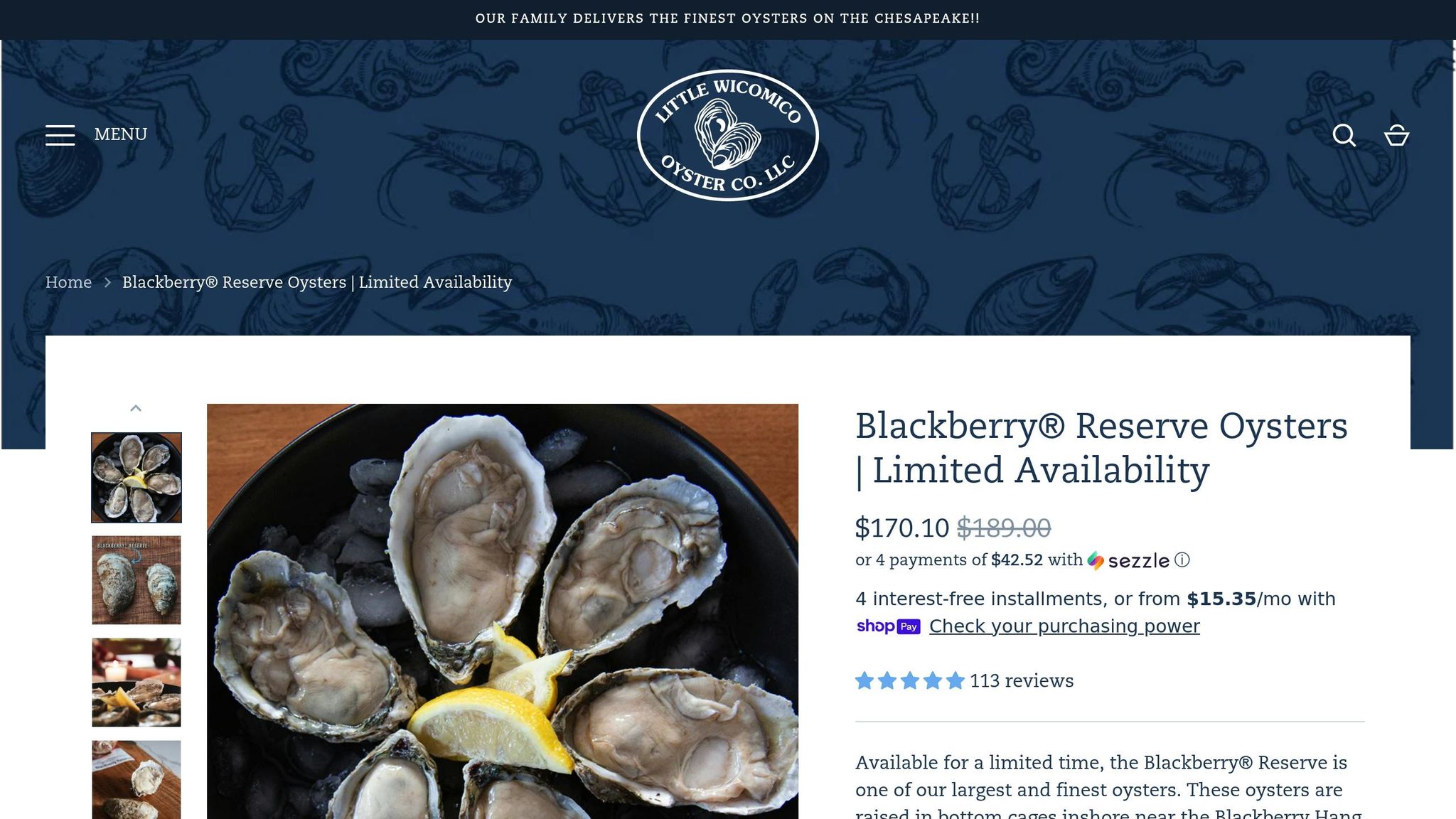
Blackberry® Reserve Oysters are the crown jewel of Virginia’s oyster offerings, harvested only from October through March. These Eastern oysters (Crassostrea virginica) are carefully raised for 12–18 months in bottom cages near the Blackberry Hang Oyster Reef. This method allows them to develop their signature sweet and buttery flavor, complemented by a clean, briny finish. The seasonal conditions during their harvest period add layers of complexity to their taste, creating a unique experience that evolves from the first bite to the last.
Flavor Comparison of Different Oyster Types
Salinity is just the starting point when it comes to flavor. Little Wicomico Oyster Co. grows several varieties within the 18–22 ppt salinity range, each offering its own distinct taste:
- Blackberry® Oysters – A year-round favorite, these oysters are known for their mild salinity, balanced sweetness, and crisp, clean finish.
- Smith Point Oysters – Grown in slightly varied micro-environments, these oysters deliver a richer, full-bodied flavor.
- Rock Hole Oysters and Peachtree Oysters – Both varieties reflect the unique characteristics of their specific growing areas, offering robust and satisfying flavors.
For those curious to explore these subtle differences, the Farm Fresh Oyster Sampler provides a side-by-side comparison, showcasing how oysters raised in similar salinity conditions can still develop distinct flavor profiles due to local environmental factors.
Ultimately, Virginia oysters demonstrate that while salinity is a key player, it’s the combination of nutrient-rich waters, sustainable farming methods, and thoughtful seasonal harvesting that creates their diverse and memorable flavors. The Little Wicomico River is a testament to how consistent salinity can interact with local conditions to produce a range of unique, delicious oysters.
How to Taste and Identify Salinity-Based Flavors
Learning to recognize how water salinity shapes the flavor of oysters can be a rewarding experience. By using intentional tasting techniques and pairing thoughtfully, you’ll begin to appreciate the unique characteristics that different growing environments bring to each oyster. These ideas build on the earlier discussion of salinity's role in flavor development.
Professional Oyster Tasting Methods
To truly identify salinity-based flavors, it’s essential to take a step-by-step approach that engages all your senses. Start by observing the oyster visually - pay attention to the appearance of the oyster's liquor, as slight variations might hint at its growing conditions. When you taste, allow the liquor to coat your palate to experience its initial brininess.
Chew slowly to uncover layers of natural sweetness and notice the texture of the meat. The finish is just as important: some oysters leave a lingering, mineral-rich taste, while others might have softer, more rounded notes. Always serve oysters chilled to maintain their balanced flavor profile. With this methodical tasting process, you’ll be better equipped to understand how simple pairings can bring out the best in each oyster.
Best Pairings for Different Salinity Levels
Once you’ve identified the flavor nuances, the right pairing can highlight and complement those unique notes. Simple pairings often work best. A light mignonette made with a touch of vinegar and finely chopped shallots can enhance the oyster’s natural brininess without overpowering its flavor.
A classic squeeze of lemon is another excellent choice. Its bright acidity can subtly emphasize mineral notes while keeping the oyster’s essence intact. For beverages, a crisp white wine or sparkling drink works beautifully to cleanse the palate between bites. If you’re a beer enthusiast, opt for lighter lagers or wheat beers with a clean finish - these won’t overwhelm the delicate balance of brine and sweetness, allowing the oyster’s full range of flavors to shine without interference from heavy sauces or condiments.
sbb-itb-5051793
How to Pick the Right Oyster for Your Taste
Choosing the perfect oyster comes down to your flavor preferences. Do you enjoy bold, briny tastes? Or do you lean toward milder, sweeter flavors? The salinity of the water where oysters grow plays a big role in shaping their taste, so understanding this can help you make the right choice.
Match Oysters to Your Flavor Preferences
If you love a bold, salty kick, oysters from high-salinity waters are your best bet. On the other hand, if you prefer a creamier texture with a touch of sweetness, look for oysters grown in lower salinity conditions. These varieties offer a softer, more delicate flavor.
Little Wicomico Oyster Co. offers a range of options to suit different tastes. Their Blackberry® Oysters, for example, provide a balanced flavor and are priced at $69.00, making them a versatile choice for many. Other varieties like Smith Point, Rock Hole, and Peachtree Oysters also start at $69.00, each offering its own unique flavor profile. Whether you're new to oysters or a seasoned enthusiast, these options let you explore a range of taste experiences.
Don’t forget, the time of year also plays a big role in how oysters taste.
How Seasons Change Oyster Flavors
As the seasons change, so do the flavors and textures of oysters. Variations in water temperature and salinity throughout the year influence their development, making certain times better for specific flavor profiles.
Winter months (October through March) are a prime time for sweeter oysters. Cooler waters and shifting salinity levels during this period bring out richer, more complex flavors. For example, Little Wicomico Oyster Co.’s Blackberry® Reserve Oysters are only available in the winter. These hand-harvested oysters are large, meaty, and noticeably sweeter than their summer counterparts. At $170.10 for 80 count (discounted from $189.00), they’re perfect for those who crave a premium winter oyster experience.
In contrast, summer and fall oysters often lean toward brinier, more mineral-forward flavors. Warmer waters and changing algae populations contribute to this distinct taste, making these oysters ideal for those who enjoy a bold, salty flavor.
By understanding these seasonal shifts, you can plan your oyster purchases to align with your flavor preferences.
Quick Selection Guide
Here’s a handy guide to help you choose the right oyster variety for your taste and the season:
| Oyster Variety | Flavor Profile | Best Season | Price | Ideal For |
|---|---|---|---|---|
| Blackberry® Reserve | Sweet, large, meaty | October-March | $170.10 (80 ct) | Special occasions, sweet lovers |
| Blackberry® | Fresh, briny, balanced | Year-round | From $69.00 | Everyday enjoyment, versatile |
| Smith Point | Full-bodied, fresh | Year-round | From $69.00 | Bold flavor enthusiasts |
| Rock Hole | Full-bodied, fresh | Year-round | From $69.00 | Traditional oyster experience |
| Peachtree | Full-bodied, fresh | Year-round | From $69.00 | Trying new varieties |
When choosing oysters, consider not only your personal taste but also the occasion and the preferences of your guests. For special gatherings or when introducing oysters to newcomers, the Blackberry® Reserve is a standout choice with its approachable sweetness and premium quality. For everyday enjoyment or mixed groups, the year-round Blackberry® variety offers a reliable, well-balanced option.
Timing your order with the seasons ensures you get the best flavor. Winter brings peak sweetness, while other seasons highlight the dynamic and diverse tastes of oysters, offering something enjoyable year-round.
Conclusion: How Salinity Creates Perfect Oyster Flavors
Water salinity plays a key role in defining the flavor spectrum of oysters. High-salinity waters (above 30 parts per thousand) deliver a bold, oceanic punch, while low-salinity environments (below 15 parts per thousand) often create a gentle, sweet balance.
As oysters filter large amounts of water, they absorb salts that concentrate their flavors - ranging from intensely briny to delicately sweet. Estuarine areas, where freshwater and seawater meet, are particularly known for producing oysters with complex and layered flavor profiles.
At Little Wicomico Oyster Co., we cultivate our oysters in the estuarine waters of Virginia's Little Wicomico River, where natural salinity variations shape their distinctive taste. For instance, our seasonal Blackberry® Reserve Oysters, available from October through March in an 80-count package for $189.00, highlight how shifts in salinity enhance flavor complexity. Our year-round selections - Blackberry®, Smith Point, Rock Hole, and Peachtree Oysters, starting at $69.00 - also demonstrate how local water conditions influence their unique profiles.
Understanding salinity can turn oyster selection into a more thoughtful experience. Whether you enjoy the sharp, mineral-forward notes of high-salinity oysters or the creamy, subtle sweetness of lower-salinity varieties, knowing these principles helps you discover oysters that perfectly suit your palate. Each bite reflects the marine environment that shaped its flavor.
FAQs
How does water salinity influence the flavor and texture of oysters?
The saltiness of the water where oysters grow has a big impact on their flavor and texture. Oysters from salty waters often deliver a bold, briny punch and have thicker shells. On the other hand, oysters from less salty environments lean toward a sweeter taste and sport thinner shells. In places like estuaries, where salinity levels shift, oysters can develop more layered and intriguing flavor profiles thanks to the changing conditions.
If you're looking for that classic salty, oceanic bite, higher salinity oysters are the way to go. Prefer something milder and sweeter? Lower salinity oysters might be your match. These variations make it easy to find oysters that suit your palate perfectly.
How can I taste and recognize the different flavors of oysters based on their salinity levels?
To dive into the flavors of oysters and how they relate to salinity, begin with the oyster liquor - the liquid nestled inside the shell. Oysters from high-salinity waters deliver a bold, salty, and briny punch, while those from areas with lower salinity offer a gentler, sweeter taste. Once you've sampled the liquor, move on to the oyster meat itself, which can reveal subtle layers of sweetness, minerality, and overall balance, all shaped by its natural surroundings.
Don't overlook the aroma either. High-salinity oysters often carry a crisp, ocean-like scent that mirrors their briny flavor, whereas low-salinity oysters tend to exude a softer, more delicate fragrance. Tuning into these sensory details allows you to truly savor the distinctive taste profiles influenced by an oyster’s habitat, helping you discover the flavors that resonate with your palate.
How do the seasons impact the taste of oysters, and when is the best time to enjoy them?
Seasonal shifts have a noticeable impact on the flavor of oysters. From September to April, when the water is cooler, oysters tend to take on a richer, saltier profile. The colder temperatures slow their metabolism and spawning processes, enhancing their taste. On the flip side, during the warmer months, oysters can have a milder or slightly sweeter flavor, with a softer texture due to increased spawning activity.
For those who savor bold, briny oysters, the cooler months are the prime time to enjoy them. Fall and winter bring out their most vibrant flavors, making it the perfect season for oyster lovers to indulge!


