


Cider and oysters make an ideal pairing thanks to cider's acidity, effervescence, and fruit-forward notes, which balance the saltiness and creaminess of oysters. Virginia oysters, particularly from Little Wicomico Oyster Co., offer diverse flavor profiles shaped by regional salinity and growing conditions. Here's what you need to know:
- Why Cider Works with Oysters: The acidity and bubbles cleanse the palate and enhance the oysters' umami and briny flavors without overpowering them.
- Virginia Oyster Profiles: Salinity levels vary by region, influencing taste. For example, Blackberry® Reserve Oysters from Little Wicomico River have a sweet, buttery flavor with moderate brininess.
-
Best Cider Styles:
- Dry Ciders: High acidity complements briny oysters.
- Infused Ciders: Ginger or botanical notes add complexity.
- Wild-Fermented Ciders: Funky and earthy, ideal for richer oysters.
- Hosting Tips: Serve oysters chilled on ice, taste them plain first, and pair lighter ciders with delicate oysters, progressing to bolder pairings.
Little Wicomico's Blackberry® Reserve Oysters (available October–March) pair especially well with semi-dry sparkling ciders, offering a balanced and flavorful experience. Whether you're hosting a tasting or just enjoying a casual meal, cider and oysters create a perfect match.
Oyster Flavor Profiles
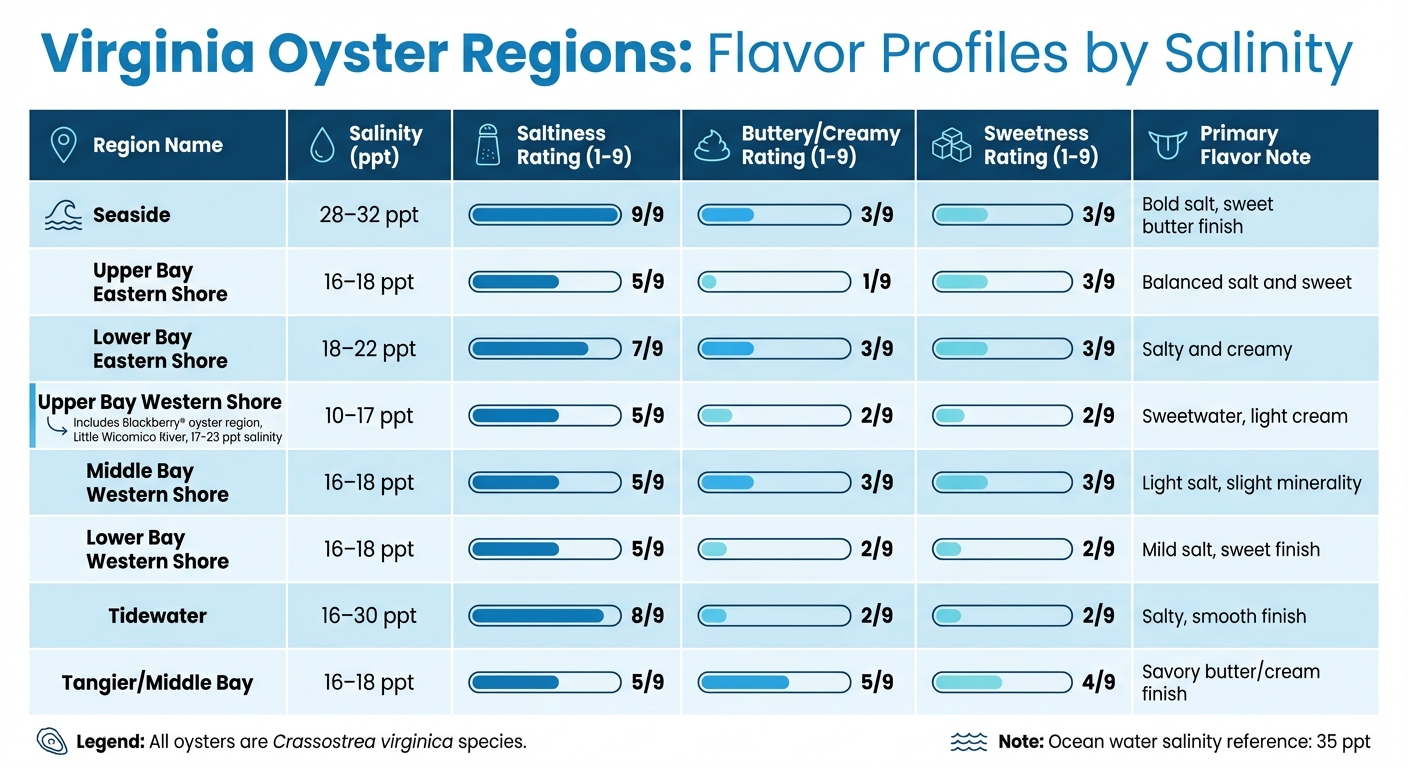
Virginia Oyster Regions Flavor Profile Comparison Chart
Virginia Oyster Regions and Their Flavors
Virginia's oysters, all part of the species Crassostrea virginica, showcase distinct flavors depending on where they’re grown. The state is divided into eight oyster-growing regions, each influenced by the unique water conditions that shape their taste profiles. As Kristen Cockrell from Little Wicomico Oyster Co. explains:
When you eat an oyster, you're tasting the water it grew in.
The standout factor here is salinity. High-salinity regions, like the Seaside (28–32 ppt), produce oysters with intense saltiness (rated 9/9) that softens into a sweet, buttery finish. On the other hand, low-salinity areas, such as the Upper Bay Western Shore (10–17 ppt), yield "sweetwater" oysters with mild creaminess and minimal brine. Blackberry® oysters, cultivated in the Little Wicomico River, thrive in waters with moderate salinity (17–23 ppt) - lower than ocean water’s typical 35 ppt - resulting in a balanced flavor profile of gentle saltiness and buttery sweetness.
Other factors also influence flavor, including water temperature, phytoplankton, and seabed composition. Cooler waters, for instance, lead to firmer oyster meat, while specific algae types can impart fresh or buttery notes. Seasonality plays a role as well: oysters harvested from October to March are sweeter and meatier due to the cooler water temperatures slowing their metabolism, allowing them to store glycogen. Summer-harvested oysters, however, may taste brinier or have a more mineral-forward profile.
| Region | Salinity (ppt) | Saltiness (1-9) | Buttery/Creamy (1-9) | Sweetness (1-9) | Primary Flavor Note |
|---|---|---|---|---|---|
| #1 Seaside | 28–32 | 9 | 3 | 3 | Bold salt, sweet butter finish |
| #2 Upper Bay Eastern Shore | 16–18 | 5 | 1 | 3 | Balanced salt and sweet |
| #3 Lower Bay Eastern Shore | 18–22 | 7 | 3 | 3 | Salty and creamy |
| #4 Upper Bay Western Shore | 10–17 | 5 | 2 | 2 | Sweetwater, light cream |
| #5 Middle Bay Western Shore | 16–18 | 5 | 3 | 3 | Light salt, slight minerality |
| #6 Lower Bay Western Shore | 16–18 | 5 | 2 | 2 | Mild salt, sweet finish |
| #7 Tidewater | 16–30 | 8 | 2 | 2 | Salty, smooth finish |
| #8 Tangier/Middle Bay | 16–18 | 5 | 5 | 4 | Savory butter/cream finish |
This diversity in regional flavors creates endless opportunities for pairing oysters with the perfect cider to enhance their unique characteristics.
Blackberry® Reserve Oysters
Blackberry® Reserve Oysters, a seasonal offering from Little Wicomico Oyster Co., are available from October through March. These oysters are grown for 12–18 months in bottom cages near the Blackberry Hang Oyster Reef. The medium-salinity waters (17–23 ppt) and winter harvest conditions result in a sweet, buttery flavor with a clean, briny finish. Compared to the year-round Blackberry® variety, the Reserves are larger, meatier, and sweeter, thanks to the slower metabolism in cooler waters, which concentrates their flavors.
These oysters deliver a well-rounded profile, balancing moderate brine with rich, buttery notes. This makes them an excellent match for a wide range of ciders, from dry and traditional options to slightly sweeter varieties. Their versatility allows them to complement different cider styles without overwhelming or clashing.
One customer, Jim, sums it up perfectly:
Nice, juicy brine on the front end. These are simply fantastic!
With a 94% five-star customer rating, Blackberry® Reserves highlight the premium quality that Virginia’s winter waters can produce. Their balanced flavor and creamy texture make them ideal for pairing with ciders, setting the stage for an elevated tasting experience. Up next, we’ll explore how these oyster profiles align with specific cider selections.
sbb-itb-5051793
Cider Styles for Pairing
Pairing cider with oysters is all about balance. Lighter ciders complement delicate oysters, while bolder ciders pair well with meatier varieties. The goal is to match the cider's intensity to the oyster's flavor profile. Light, crisp ciders highlight subtle oyster flavors, while structured, bold ciders can stand up to richer, more complex varieties. Let’s dive into how different cider styles - dry, traditional, infused, and wild-fermented - can elevate the oyster experience.
Dry and Traditional Ciders
Dry ciders are a go-to choice for oyster pairings. Their high acidity serves as a palate cleanser, cutting through the richness and saltiness of briny oysters while enhancing their natural mineral qualities. Sparkling dry ciders, in particular, refresh the palate and complement the creamy texture of oysters.
Traditional cider styles bring their own unique characteristics to the table. English dry ciders are bold and tannic, offering a sturdy structure; French Cidre Brut balances citrus and pear flavors with a touch of funk from wild fermentation; while Spanish Sidra delivers a tart, earthy profile with pronounced acidity - perfect for offsetting the saltiness of oysters. For moderate-salinity oysters like Virginia's Blackberry® varieties, a semi-dry sparkling cider strikes the perfect balance. Its crisp acidity cuts through the gentle saltiness, while subtle fruit notes enhance the oyster's buttery finish.
Infused and Wild-Fermented Ciders
Infused and wild-fermented ciders take oyster pairings to another level by adding layers of complexity. These styles don’t just complement oysters - they transform the tasting experience.
Ginger-infused ciders, for instance, bring a soft heat that pairs wonderfully with the umami and sweetness of oysters harvested in cooler months. The spice adds depth without overshadowing the oyster's natural flavor. Hopped or botanical ciders, on the other hand, introduce herbal, floral, or citrusy notes that enhance oysters with grassy or fruity characteristics.
Wild-fermented ciders, like Spanish Sidra or French Cidre Brut, develop funky, earthy flavors with hints of barnyard, leather, or oak. Their high acidity and tannic structure make them a great match for richer oysters, such as Blackberry® Reserve Oysters.
Herbal and botanical infusions are becoming increasingly popular, opening up even more pairing opportunities. Ciders infused with ingredients like rosemary, lavender, or basil can mirror or enhance the savory notes in oysters served with fresh herbs. For example, a basil-infused cider pairs beautifully with herb-accented oysters, creating a seamless and elevated tasting experience.
Next, let’s explore how these cider styles pair with specific oyster varieties.
Cider Pairings for Little Wicomico Oysters
Little Wicomico Oyster Co. offers oyster varieties with a balanced salinity and subtle mineral notes, making them perfect for thoughtful cider pairings. Thanks to a mix of freshwater and Chesapeake Bay influences, these oysters have a moderate salinity that doesn't overwhelm the palate. Below, see how the right cider can elevate each oyster variety.
Pairing Cider with Blackberry® Reserve Oysters
Blackberry® Reserve Oysters are a seasonal delight, available from October through March. They boast a sweet, buttery flavor with mild salinity and a creamy texture.
Semi-dry sparkling apple ciders or Champagne-style ciders are excellent matches. Their bright acidity and lively bubbles balance the oysters' richness, enhancing the umami and saline notes. Citrus undertones - like lemon or green apple - add a crisp, refreshing finish, while the effervescence complements the creamy texture beautifully.
"A semi-dry sparkling, low tannin apple cider pairs with fresh oysters, offering a refreshing cut that completes the dish. The umami and salty flavors of the oysters are cut by the acidity and enhanced by the fruit in the cider."
Off-dry or lightly sweet ciders are another great option. A touch of sweetness harmonizes with the umami flavors, while the lower alcohol content ensures the cider doesn’t overpower the oysters’ delicate profile. For the best experience, serve sparkling ciders chilled to 45–50°F to preserve their crispness and effervescence.
Pairing Cider with Other Oyster Varieties
Little Wicomico’s year-round oyster varieties - such as Blackberry Oysters, Smith Point Oysters, Rock Hole Oysters, and Peachtree Oysters - each offer unique characteristics that call for thoughtful cider pairings.
- For high-brine oysters, semi-sweet or berry-infused ciders strike a perfect balance. The natural saltiness softens any bitterness or sharp acidity in the cider, allowing the fruit flavors to shine.
- For meaty or buttery oysters, dry, high-acid ciders are ideal. Their refreshing acidity and tannins cut through the richness, leaving the palate clean.
- For mineral-forward oysters, opt for a crisp, dry cider that complements the oceanic essence without overwhelming the subtleties. Lighter oysters pair best with delicate ciders, while richer varieties can handle bolder styles.
"If a cider retains just a little bit of sugar, it plays nicely with the umami in the oyster: undercurrents of an individual oyster's character are more readily available to explore."
Rawcider.com
Hosting a Cider and Oyster Tasting
Planning a cider and oyster tasting at home can be both simple and enjoyable with the right setup and a little preparation. By organizing the event thoughtfully, you can highlight the natural flavors of both the oysters and the ciders. The Farm Fresh Oyster Sampler with Shucking Knife from Little Wicomico Oyster Co. is a great starting point, providing premium oysters and the essential tool for opening them. Once you have your supplies, focus on creating a tasting experience that showcases the unique pairing of these two delights.
Tasting Setup and Equipment
A successful oyster tasting begins with proper preparation and the right tools. Start by using an oyster shucking knife and a protective glove or towel to safely open the shells. Before shucking, scrub each oyster under cold running water and check for freshness - discard any that are open or have an off smell.
For presentation, arrange the oysters on large platters filled with crushed ice to keep them chilled throughout the event. If you’re aiming for a more elegant look, a bed of salt works just as well. Serve the ciders chilled in glassware that enhances their effervescence. Plan on about 12 oysters per person to ensure everyone has enough to enjoy.
Set up small bowls with classic accompaniments like mignonette, lemon wedges, hot sauce, and horseradish. To elevate the experience, include informational cards detailing the origin and flavor profile of each oyster. These cards help guests appreciate the unique "merroir" (a term for the environmental influences on an oyster's flavor). Provide tasting note sheets so guests can jot down their impressions and favorite pairings. Don’t forget essentials like oyster forks and moist towelettes for easy cleanup.
Tasting Order and Pairing Approach
The order of tasting plays a key role in enhancing the experience. Begin by encouraging guests to try each oyster "naked" - without any condiments or garnishes. This allows them to fully appreciate the oyster's natural flavor and its merroir before experimenting with cider pairings or toppings.
To avoid overwhelming the palate, sequence the tasting from lighter, mineral-forward pairings to richer, bolder flavors. Start with oysters that have lower salinity paired with delicate, sparkling ciders. Gradually move toward brinier oysters matched with more robust ciders. This gradual progression ensures a balanced tasting experience. Pair the intensity of the oyster with the cider - lighter oysters pair best with subtle ciders, while creamier, buttery oysters can handle more full-bodied, high-tannin ciders.
The "4 C's" framework is a helpful guide when planning pairings. It focuses on balancing flavors through four elements:
- Cut: Acidic ciders cleanse the palate.
- Contrast: Sweet ciders balance the saltiness of oysters.
- Complement: Similar flavor notes enhance each other.
- Complete: Ciders add a missing flavor element to the pairing.
Serve the ciders well-chilled and offer palate cleansers like cucumber dill salad or sparkling water with a hint of citrus between varieties. The lower alcohol content of cider makes it an ideal match, as it won’t overpower the oyster's delicate flavors.
Conclusion
Cider's acidity, sweetness, and effervescence work together to balance the richness of oysters. This harmony is achieved through the "4 C's" framework: acidity to cut, sweetness to contrast, shared flavors to complement, and botanical notes to complete the pairing. With its lower alcohol content, cider lets the delicate flavors of oysters shine, while its bubbles enhance creaminess and refresh your palate between bites.
These principles come to life with standout offerings like Little Wicomico Oyster Co.'s Blackberry® Reserve Oysters. Their sweet, buttery, and mildly saline profile pairs beautifully with both dry and semi-sweet ciders. With a 94% five-star rating, they’re a seasonal treat available from October to March - perfect for tastings or special occasions. For a complete experience, the Farm Fresh Oyster Sampler with Shucking Knife ($99.00) provides everything you need to create your own pairing adventure at home.
To fully appreciate oysters' unique flavors, start by tasting them plain to savor their merroir. Experiment with pairings, moving from light, mineral-driven matches to richer combinations. Serve oysters at 35–38°F on crushed ice and chill your ciders well for the best experience.
As Jennie Dorsey from the American Cider Association reminds us:
The only truly important part of pairing is to remember that if you like it, it works!
Let your taste buds guide you, explore these thoughtfully balanced pairings, and enjoy an unforgettable oyster and cider experience.
FAQs
How do I match a cider to an oyster’s salinity?
When pairing cider with the salty tang of oysters, go for a dry cider that offers a good balance of acidity and minerality. This combination works beautifully to complement the oyster’s briny character. If you’re looking to highlight the oyster’s savory, umami-rich flavors, consider a cider with a touch of sweetness. The key is to choose flavors that blend seamlessly with the oyster’s natural taste for an unforgettable pairing.
What cider should I pour with Blackberry® Reserve Oysters?
A sparkling cider with a hint of sweetness pairs beautifully with Blackberry® Reserve Oysters. The cider's subtle sweetness balances the oysters' natural brininess while highlighting their sweet, buttery flavor and smooth, creamy texture.
What’s the safest way to store and serve oysters at home?
To keep oysters fresh and safe, maintain a temperature between 33°F and 40°F. Use a breathable container, such as a mesh bag or a tray covered with a damp cloth. Always store oysters cup-side down - this helps them hold onto their natural juices. Avoid using airtight containers or exposing them to fresh water, as this can harm them.
When it’s time to serve, arrange oysters on crushed ice. Be sure to check for any with cracked shells or those that don’t close when tapped - these should be discarded immediately. Following these steps ensures your oysters stay fresh and safe to enjoy.


